
Dune Life Nature Trail
Trailhead Dune Life Nature Trail 4,002 ft Drive there
Hiking Dune Life Nature Trail the Park Service's write-up
45-60 Minutes · dogs allowed
Start Dunes Drive
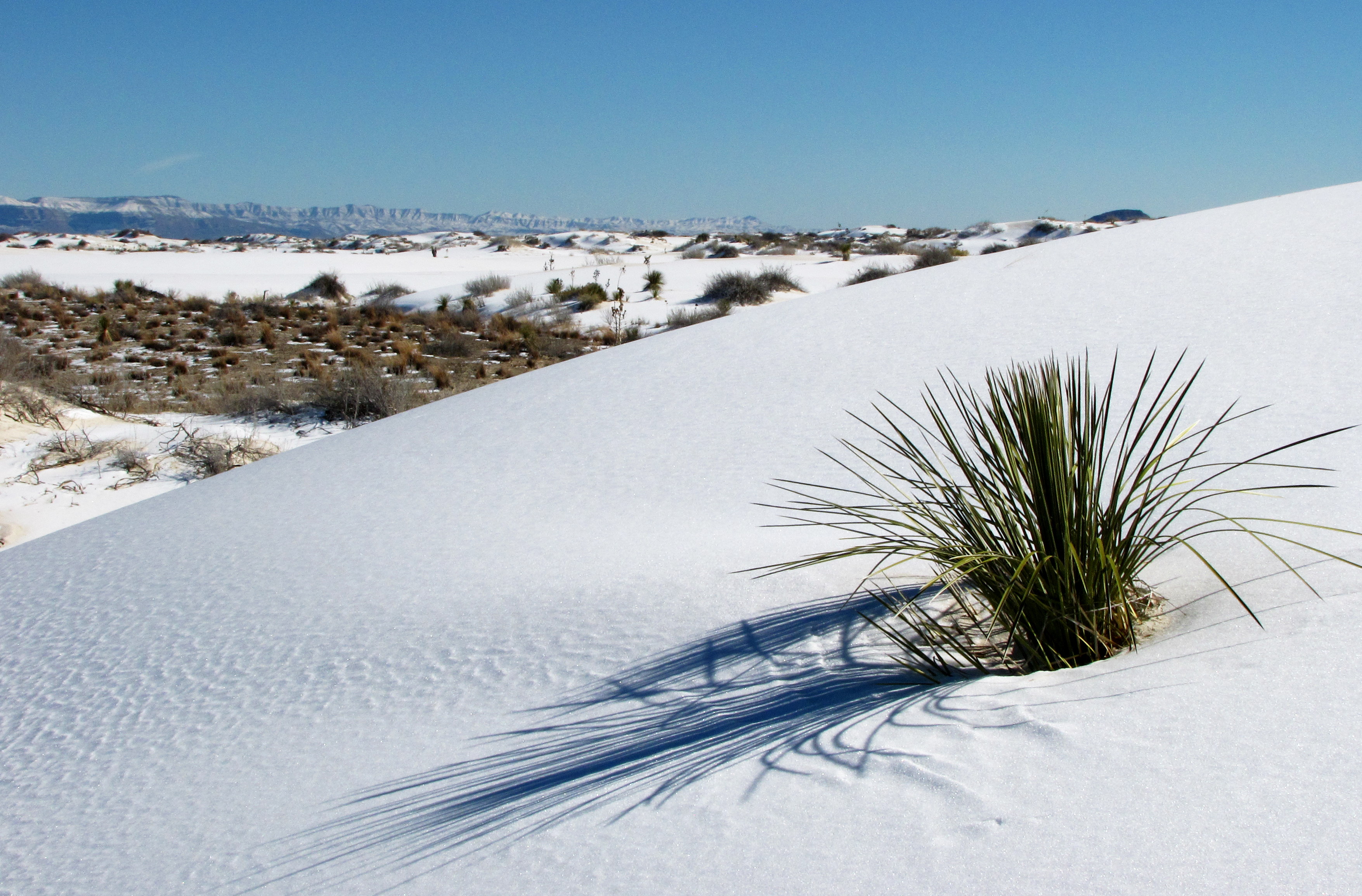
Join Dune Life Nature Trail mascot Katie the Kit Fox along this trail to learn about the animals that live here in 14 interpretive signs.
The Dune Life Nature Trail is an ecotone: a place where two communities meet and integrate. In this area, the desert scrub community and the gypsum sand dunes meet and form one of the most diverse ecosystems in the park. Look for the tracks of the animals that call these dunes home: kit foxes, badgers, birds, coyotes, rodents, and reptiles all live in this area.
Dune Life Nature Trail is a moderate one mile (1.6 km) loop through dunes of up to 30 feet (9.1 m) tall as well as an interdune area.
This trail takes an average of one hour to complete.
You will follow blue trail markers with a club symbol to navigate the trail.
Ranger Recommendations
Bring plenty of water for your family and pets
This trail has very little shade. Use adequate sun protection.
Look carefully for the next trail marker before continuing. If you cannot see the next trail marker because of blowing sand or because the trail marker is knocked down, do not proceed—return to your car. Strong winds can reduce visibility to a few feet, making it easy to become lost.
Keep in mind that this trail is for observing plant and animal life. If you want to play in the sand, please drive farther down Dunes Drive where there are better dunes for sledding and picnic tables with shade.
Stay on the trail to avoid damaging delicate biocrust.
Visit our Hiking Safety page for more recommendations about hiking in the unique conditions of White Sands National Park
Accessibility This trail is not ADA accessible. This hike includes walking up and down sand dunes of up to thirty feet (9 meters) on loose gypsum sand. The park's only accessible trail is the Interdune Boardwalk .
Hiking the Ice Age Trail 0.8 mi loop · the Park Service's write-up
45-60 Minutes · dogs allowed
Start Dunes Drive
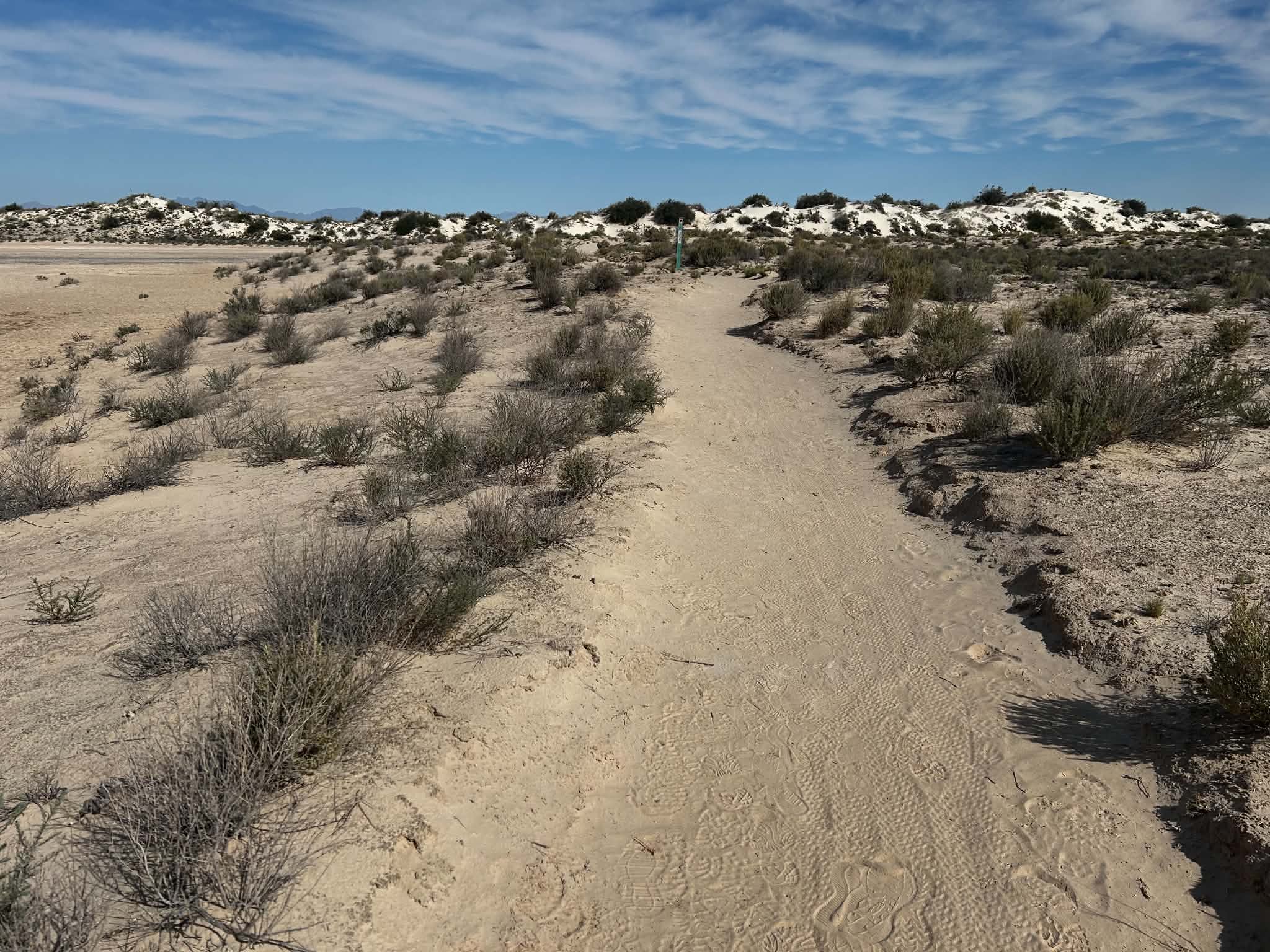
Between 21,000 and 23,000 years ago, the Tularosa Basin was a lush wetland dominated by ancient Lake Otero. Humans and ice age giants such as mammoths and American lions left footprints in the soft mud of the lake. When conditions were right, these footprints were preserved to the modern day. Learn about this ancient landscape
Ice Age Trail is a 0.8 mile (1.3 km) loop.
Green trail markers with a heart symbol mark the trail.
Nine interpretive panels are located along the trail
Ranger Recommendations
Bring plenty of water for your family and pets.
This trail has no shade--bring adequate sun protection.
Stay on the trail to avoid damaging delicate biocrust.
Visit our Hiking Safety page for more recommendations about hiking in the unique conditions of White Sands National Park.
Accessibility This trail is not ADA Accessible. The trail is mostly flat, compacted sediment. The park's only accessible trail is the Interdune Boardwalk .