
Lassen Peak Trail
ViewsPeaks
Along the way Lassen Peak Grand View
Trailhead Lassen Peak Trailhead 8,457 ft Drive there
Hike Lassen Peak the Park Service's write-up
4-5 Hours · no dogs · Summer, Fall · season Lassen Peak is covered with many feet of snow in the winter. There is also avalanche danger. It takes special equipment and training to ascend the mountain in winter.
Start Lassen Peak
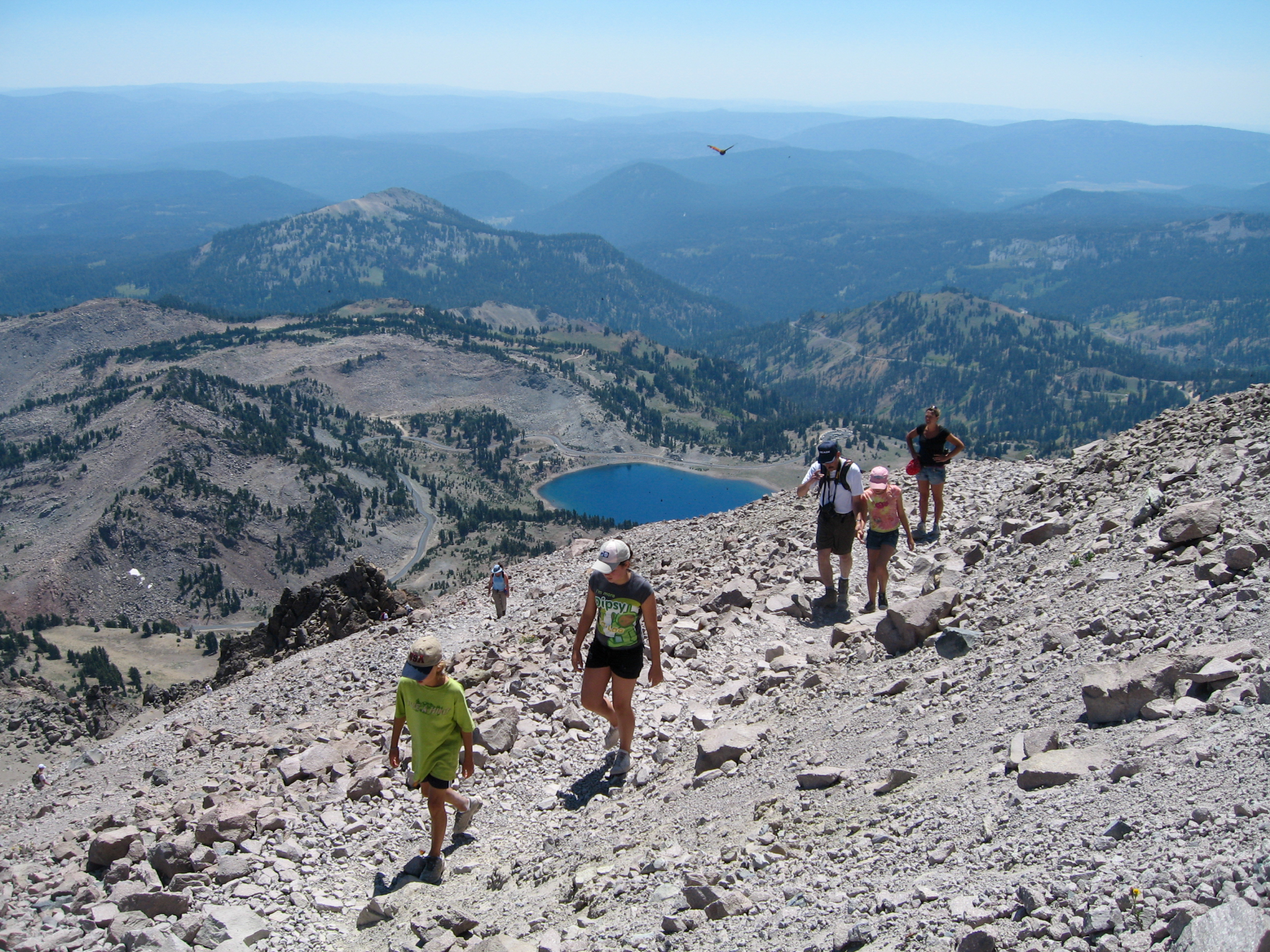
Start: Lassen Peak Trailhead
Level of Difficulty: Strenuous
Round-Trip Distance: 5 miles (8 km)
Time: 4-5 hours
Elevation Start/Gain: 8,500 ft (2591 m) / 1,957 ft (596 m)
Surface: Packed dirt with some lose rock from erosion
Lassen Peak Trail climbs to the summit of one of the largest plug dome volcanoes in the world. Beginning at the Lassen Peak parking area, the trail climbs through twisted mountain hemlock and whitebark pine trees on sand-like cinders. As the trees begin to thin and vistas of the park come into view, the trail steepens into series of switchbacks along a rocky ridge to the summit. The maintained trail ends at the first summit where hikers can read interpretive signs, rest, and enjoy the panoramic view. From there, hikers may continue up the steep route to the true summit or descend into the interior of the crater to explore the remnants of the dramatic eruptions that have rocked this volcano.
How to Hike This Trail Safely
Hiking Lassen Peak Trail involves risk. Learn more about general hiking safety in this high-elevation and remote park. Special considerations for this trail include:
Snow Conditions can persist through the summer months. Wear proper footwear and consider using trekking poles to help maintain balance. Travel in the winter months requires winter backcountry travel knowledge and equipment.
Sun Exposure is considerable on Lassen Peak Trail. Tree shade may be found in the first mile after which limited shade is available.
Sudden Changes in weather occur frequently and snow is possible any month of the year. Get an early start to avoid afternoon storms and lightning. Carry extra layers for warmth.
Hiking at High Elevation can aggravate pre-existing medical conditions. Know the effects of altitude. Carry plenty of water, take breaks often, and do not exceed your abilities.
Yield to Uphill Hikers
Please carefully step off to the side of trail to allow uphill hikers to pass or to stop for a break.
Please Stay on the Trail Do Not Cut Switchbacks
You can enjoy and help preserve one of the park’s oldest and most popular trails by simply staying on it. Traveling off-trail causes damage. Your footsteps can push rocks onto the trail, create pathways for water erosion, and undermine the supporting slope. See hikers straying from the trail? Speak up! A courteous reminder about why it’s important to stay on the trail is usually enough. If not, please report destructive behavior to a park ranger.
Pets Service animal allowed. No pets.
Accessibility Not accessible to wheelchairs.
Hike Reflection Lake Loop the Park Service's write-up
15-30 Minutes · no dogs · Spring, Summer, Fall · season <p>Reflection Lake Trailhead is located at 5,890 feet in elevation. Snow can linger on the Reflection Lake Trail well into April. The trail is best enjoyed without snow; typically May through October.</p>
Start Reflection Lake Trail
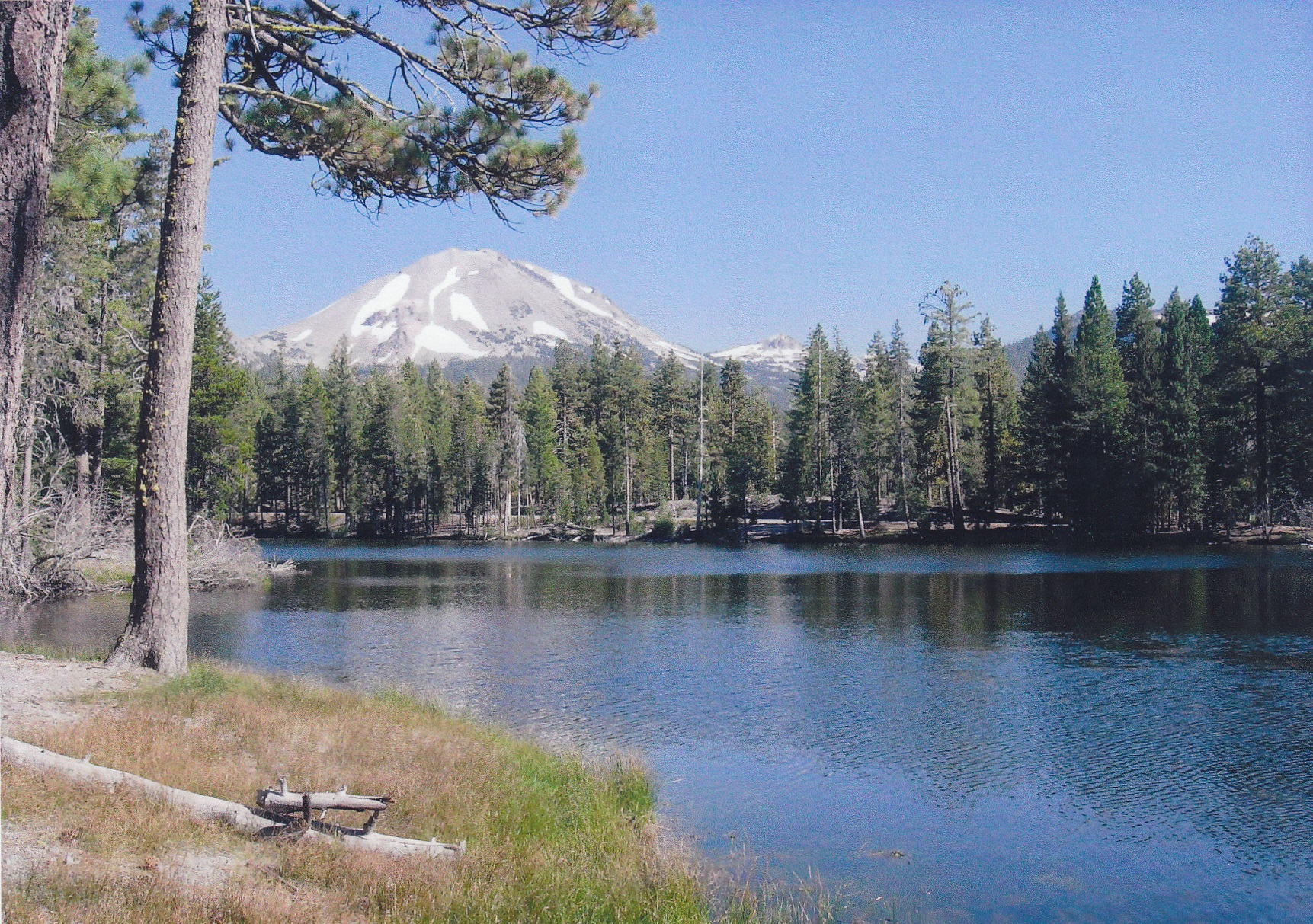
Start : Lily Pond/Reflection Lake Trailhead, across highway from Loomis Museum
Round Trip Distance : 0.5 miles
Round Trip Time : half-hour
Elevation: 5,890 ft
Elevation Change : Negligible
Surface: Dirt with tree roots and exposed rock in places, may be soft/wet in spots.
Season: May through October (when snow-free)
This half-mile loop hike circles Reflection Lake leading to spectacular views of Lassen Peak and Chaos Crags on its northern shore often seen reflecting in the water. It is ideal for families with young children or anyone looking for a short and relatively flat walk with rewarding views. Water birds such as Canada geese, coot and mallard ducks are often on the water. A portion of the trail overlaps the Lily Pond Interpretive Trail, which offers an opportunity to learn about the rich diversity of plant and animal life along the loop.
Reflection Lake Recreation
Recreation on Reflection Lake is limited. Please note:
boats , rafts and other floatation devices are not permitted on Reflection Lake.
Swimming is not advised due to bacterial contaminates, algae, water plants and excessive fallen logs and other obstacles along the shoreline.
Fishing opportunities are limited on Reflection Lake. Excesive water plants and lakeshore debris are sure to snag line and hook. Only tiu chub fish live in Reflection Lake.
Parking is available across the highway at the Loomis Plaza, although the parking area is often full in the summer season. Additional parking is available at the Manzanita Lake Day Use Area , which connects to the Loomis Plaza via a short section of the Manzanita Lake Trail . Bikes and pets are not permitted on park trails. Strollers and wheelchairs are not recommended as the trail is rocky and narrow in some sections.
How to Hike This Trail Safely
Walking any park trail involves risk. This trail is appropriate for all ages, however all visitors should be familiar with general hiking safety in this high-elevation and remote park, including:
Wear proper footwear (good tread, ankle support, closed toe). Knee and ankle injuries are the most common visitor injury in the park.
Hiking at high elevation can aggravate preexisting medical conditions. Know the effects of altitude. Carry plenty of water, take breaks often, and do not exceed your abilities.
Pets Pets are not permitted on park trails, including in a carrier. Learn more about visiting with pets . This regulation does not apply to service animals assisting a person with a disability. A service animal, as described by the ADA (Americans with Disabilities Act) performs a specific task for a disabled person.
Accessibility The composition of the trail is dirt and rock. Most of the trail is flat with the exception of some hilly areas and narrow sections. There is one short and shallow wet crossing during spring and early summer. Service animals assisting a person with a disability are permitted on park trails. A service animal, as described by the ADA (Americans with Disabilities Act) performs a specific task for a disabled person.