
Sliding Sands Trail
Moderate Hike into Haleakalā's Crater the Park Service's write-up
1-2 Hours · no dogs · season Temperatures generally start off cool in the morning and warm up in the afternoon all year. Winter is the rainy season in Hawaii, and there may be an increased chance for fog or storms in the afternoon, no matter the season.
Start Keoneheʻheʻe Trailhead
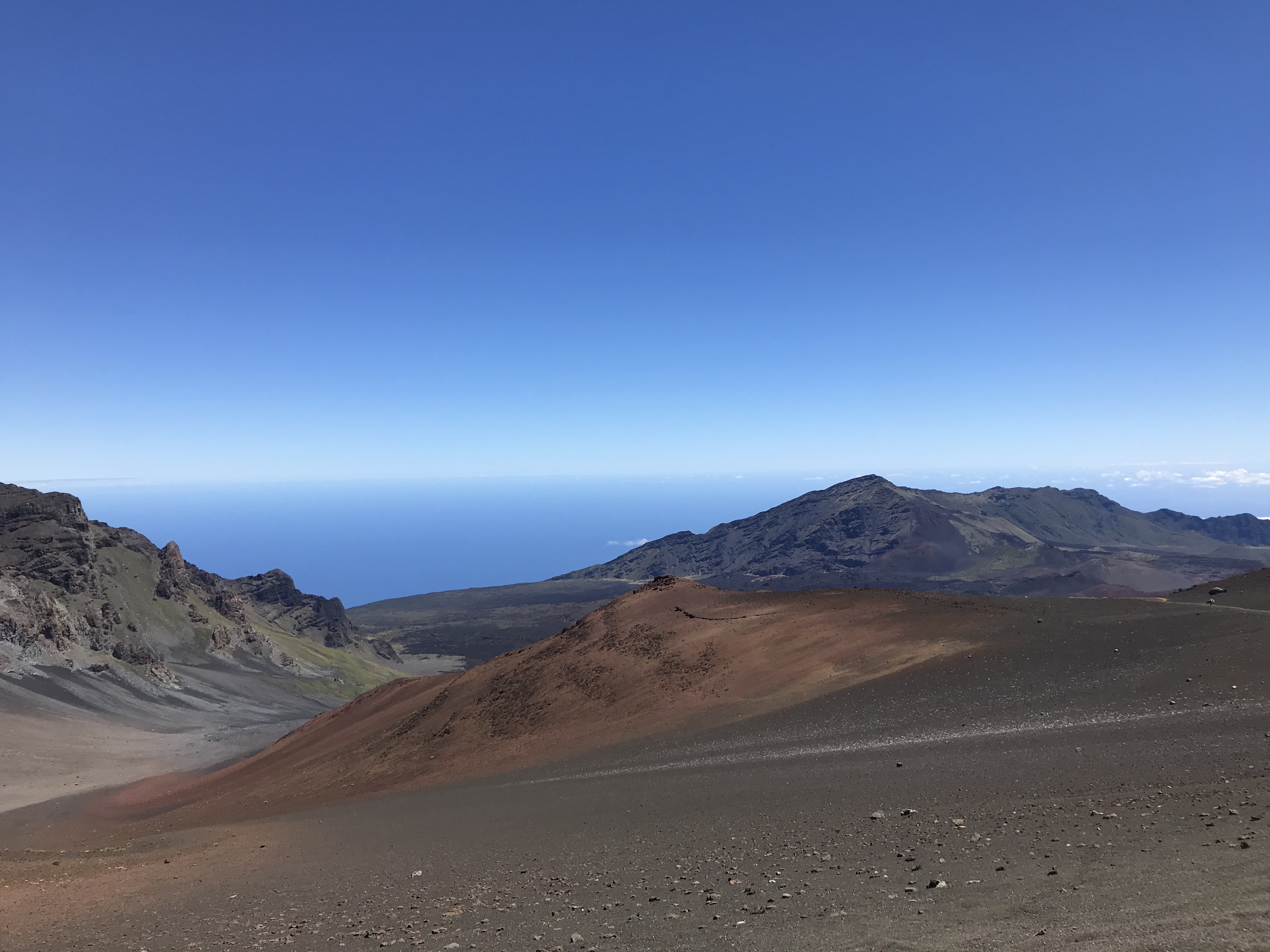
For an adventure into an otherwordly landscape, hike a short ways down the Keoneheʻeheʻe (Sliding Sands) Trail and experience the crater up close. Make your way down the sandy trail to a natural overlook that offers new perspectives on the puʻu (cinder cones) that dominate the crater floor. Each puʻu represents a different erruption site, the youngest of which occured only about 1,000 years ago. Geologically speaking, thatʻs recent! Discover what makes the Hawaiian volcanoes stand out in our Geology Guide .
Life is harsh in this windy, sunny environment. The ʻāhinahina, or Haleakalā silversword, is a plant unique to Haleakalāʻs summit area. Its special adaptations allow this species to live where few can. While they are equiped to handle intense sun and desert conditions, they are easily damaged when curious people get too close. Protecting this endangerd species from harm is an excellent reason why all visitors stay on the established park trails. Learn more about ʻāhinahina and other native plants in our Plants Brochure .
For a moderate hike, follow the trail down 1 mile (1.6 km) to a natural overlook before the trail begins a series of switchbacks. Making it down to this point loses about 500 feet (152 m) in elevation, equivalent to a 50-story building. The steep, sandy nature of the trail can be strenous as such high altitude. Be prepared with sun protection and plenty of water for everyone in your group before hiking this trail.
Pets There are no pets permitted on trails or in the Wilderness Area.
Accessibility This trail is not accessible to wheelchairs. The first quarter-mile is rocky but flat. Beyond that point, the trail is steep and the loose cinder trail can be challenging.
Strenuous Hike Across the Crater Floor the Park Service's write-up
7-9 Hours · no dogs · season Temperatures generally start off cool in the morning and warm up in the afternoon all year. Winter is the rainy season in Hawaiʻi, and there may be an increased chance for fog or storms in the afternoon, no matter the season. Always come prepared with both sun and rain protection, along with extra layers and emergency shelter.
Start Keoneheʻheʻe Trailhead
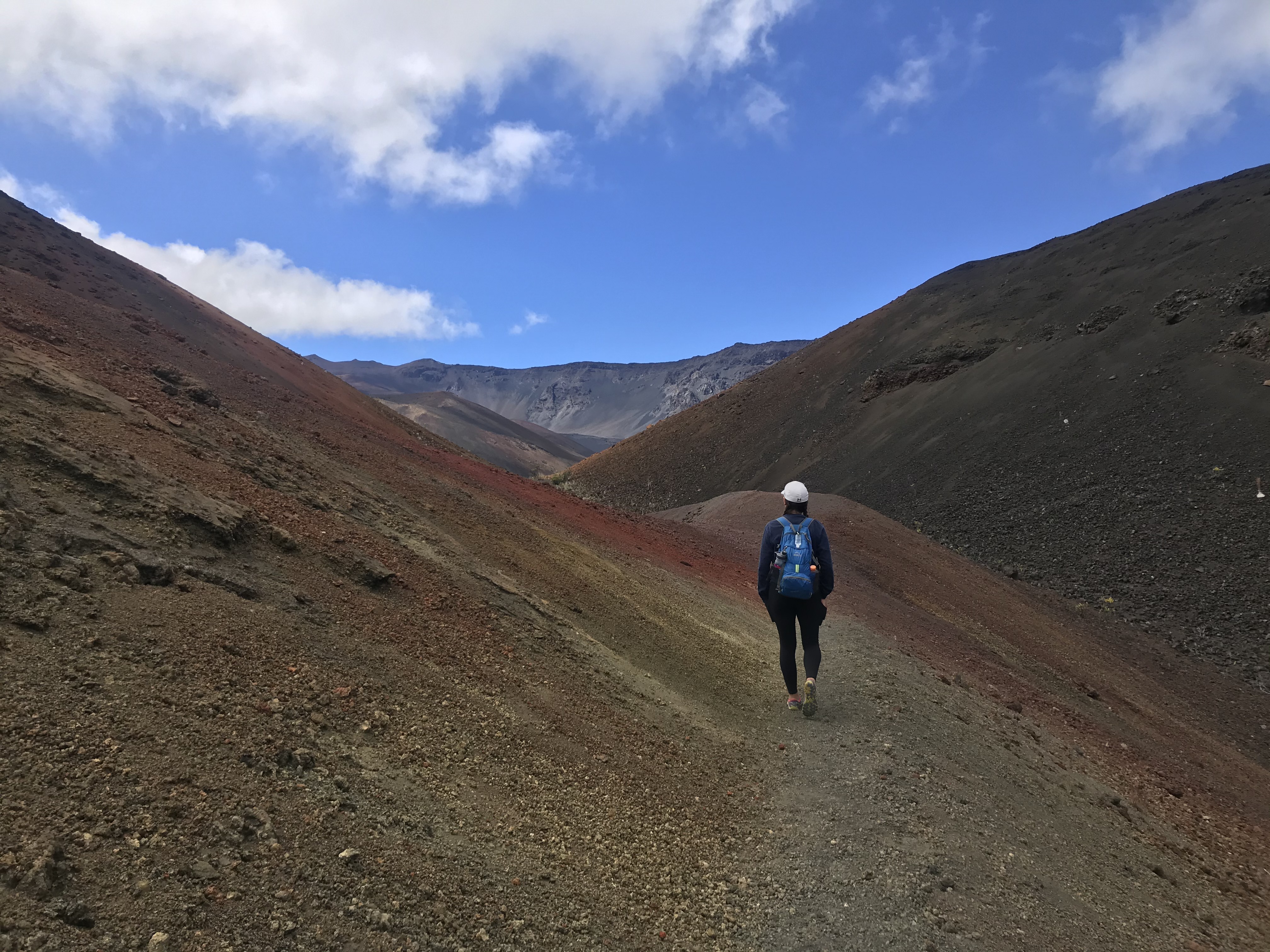
For experienced and prepared hikers, there's no better way to appreciate the challenge and the joy of the crater than to hike into it, across the floor, and out the other side. This hike is extremely strenous, crossing 11.2 miles (17.7 km) of rugged terrain, and involving several thousand feet of elevation change. Anyone undertaking this hike should be familiar with extreme mountain environments. The entire hike is in the remote Wilderness Area, where assistance may be hours away or unaccessible altogether.
Most thru hikers prefer to start at the Keoneheʻeheʻe (Sliding Sands) Trailhead, located in a corner of the Haleakalā Visitor Center parking lot. Be advised that the thru hike is not a loop, and hikers will conclude their hike at the Halemauʻu Trailhead, several miles down the road from their starting point. Hikers are responsible for coordinating their own transportation between trailheads. The park cannot offer hiker shuttles, so consider using the “hiker pick-up” near here.
Points of Interest:
The "crater floor" is 3.9 miles (6.3 km) down one way. The elevation change is almost 2,500 ft/762 m.
Kawilinau is about 5.7 miles in (9.2 km) was formerly called the "bottomless pit." The volcanic pit is 65 feet deep. Hike around the Halāli'i pu'u to catch the view of Kawilinau, and explore this colorful cinder cone.
Pets Pets are not permitted on any trails or in the Wilderness Area.
Accessibility This trail is extremely long and steep. While the trailheads have accessible parking, this trail is not recommended for who may require assistance.