
Craggy Gardens Trail
See the Rhododendrons Bloom at Craggy Gardens the Park Service's write-up
1-4 Hours · dogs allowed · Spring, Summer · season <p>The Catawba rhododendrons at Craggy Gardens typically bloom in early to mid-June. But rhododendrons and related species like mountain laurel can be seen in other areas of the Parkway through late July.</p>
Start Craggy Gardens, Milepost 364-367
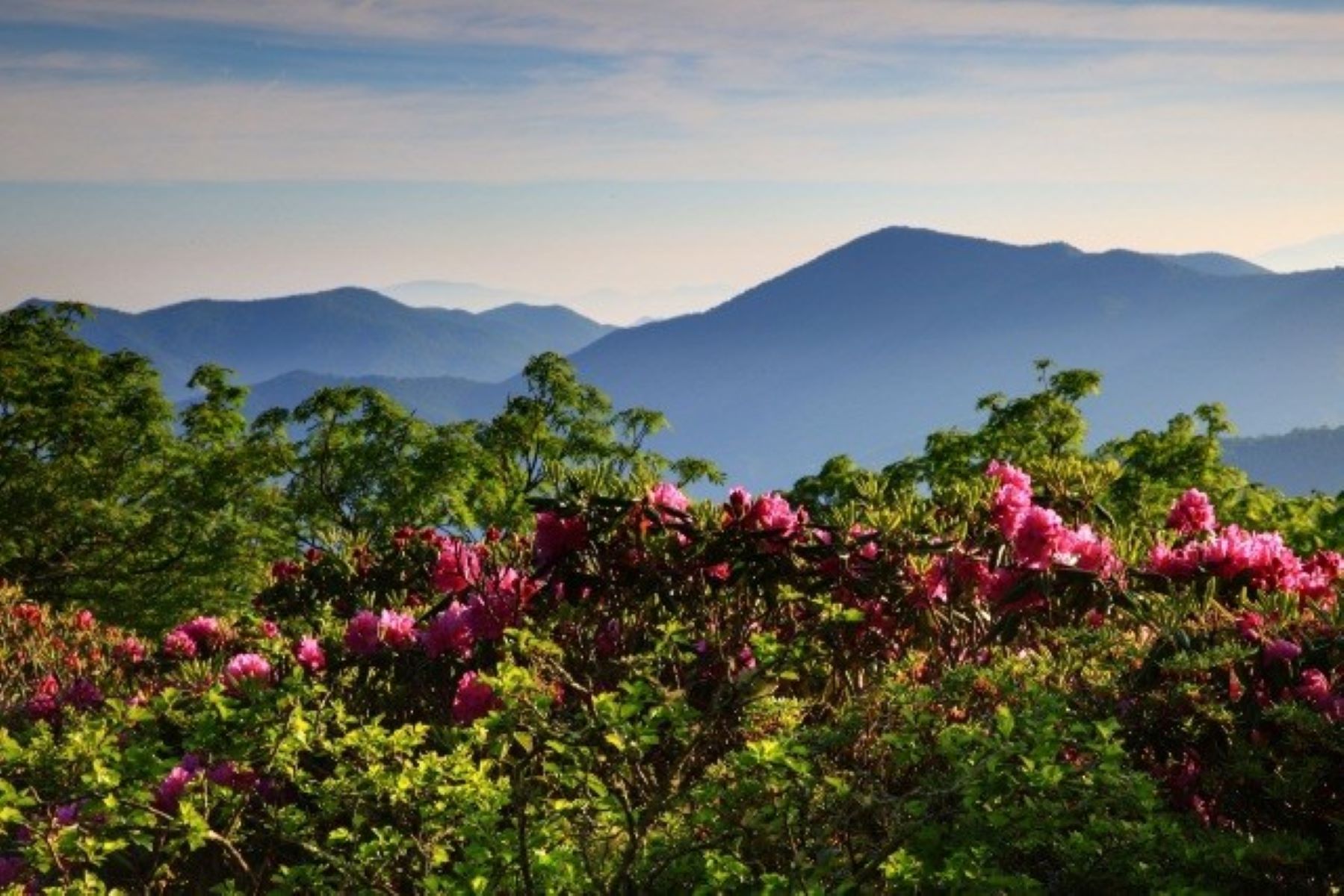
Western North Carolina has more vascular plant diversity than all of Europe, and the Parkway’s elevation changes, high rainfall, and rich soil make it an ideal environment for plants and wildflowers, including a rare, high elevation forest that explodes with bountiful bursts of pink, purple, and white rhododendron each summer. One of the best—and most accessible—ways to enjoy these colorful blooms is by visiting Craggy Gardens.
Enjoy the view as you drive to Craggy Gardens. At 5,500 feet in elevation, the vistas are spectacular on clear days. Look for blooms along the Parkway, at the picnic area, and around the visitor center. Stop in the visitor center to view the natural history exhibits and maybe buy a souvenir of your visit.
For an up close view of the rhododendron, follow the self-guided Craggy Gardens Trail from the southern end of the visitor center parking lot. You’ll hike through a stunted mixed-hardwood forest of mountain ash, birch, and beech before passing through a dense thicket of rhododendron and heath plants. This moderate uphill climb ends at a rustic trail shelter after 0.3 miles.
To enjoy the “gardens,” take the short spur trail to the left of the shelter. Soon, you’ll reach the top of a high-elevation meadow, where you’ll find unobstructed views of the surrounding mountains and adjacent Pisgah National Forest. Rhododendron bushes are abundant in the meadow. The Catawba rhododendron is a medium-sized shrub with dark, waxy leaves and pink or purple flowers. Their blooms usually peak from early to mid-June, depending on environmental factors such as rainfall, wind, and temperature. Please help protect these special resources by staying on designated trails.
The high-elevation forest of the Blue Ridge Parkway is a special ecosystem that supports the survival of many unique and endemic species, including the Catawba rhododendron. A native of the eastern United States, this evergreen shrub grows above 3,000 feet on rocky, exposed ridges. The colorful blooms signal the onset of summer in the Appalachian Mountains.
Accessibility Blooming rhododendron can be readily seen at Craggy Gardens along the side of the Parkway, in the picnic area, and around the visitor center. The Craggy Gardens Trail is a unpaved dirt trail that varies from 2 to 4 feet wide with moderate uphill gain and several sections of roots and rocks.